無料PDFIntroduction-to-IT日本語版試験勉強法 &資格試験のリーダー &効率的Introduction-to-IT日本語版
Wiki Article
2026年CertJukenの最新Introduction-to-IT PDFダンプおよびIntroduction-to-IT試験エンジンの無料共有:https://drive.google.com/open?id=1xLOVXJgmJmyk_4sWjOnxj488Qojl9d_V
時間が経つとともに、我々はインタネット時代に生活します。この時代にはIT資格認証を取得するは重要になります。それでは、Introduction-to-IT試験に参加しよう人々は弊社CertJukenのIntroduction-to-IT問題集を選らんで勉強して、一発合格して、WGUIT資格証明書を受け取れます。
WGU Introduction-to-IT 認定試験の出題範囲:
| トピック | 出題範囲 |
|---|---|
| トピック 1 |
|
| トピック 2 |
|
| トピック 3 |
|
| トピック 4 |
|
| トピック 5 |
|
>> Introduction-to-IT日本語版試験勉強法 <<
Introduction-to-IT日本語版 & Introduction-to-IT問題例
今日の社会では、能力を高めるために証明書を取得することを優先する人がますます増えています。まったく新しい観点から、Introduction-to-IT学習資料は、Introduction-to-IT認定の取得を目指すほとんどのオフィスワーカーに役立つように設計されています。当社のIntroduction-to-ITテストガイドは、現代の人材開発に歩調を合わせ、すべての学習者を社会のニーズに適合させます。 Introduction-to-ITの最新の質問が、関連する知識の蓄積と能力強化のための最初の選択肢になることは間違いありません。
WGU Introduction to IT 認定 Introduction-to-IT 試験問題 (Q48-Q53):
質問 # 48
Which component is part of the system unit?
- A. Motherboard
- B. Keyboard
- C. Printer
- D. Monitor
正解:A
解説:
The system unit refers to the main computer case and the internal components housed inside it. In Information Technology hardware terminology, the system unit contains the core electronic parts required for processing and storage, including the motherboard, CPU, RAM, storage drives, power supply, and expansion cards. The motherboard is a central internal component of the system unit because it is the main circuit board that holds and connects major hardware parts through sockets, slots, and buses. By contrast, a keyboard is an external input peripheral, a monitor is an external output display device, and a printer is an external output peripheral used for hard-copy printing. While these peripherals are essential for user interaction, they are not considered part of the system unit itself. Understanding this distinction is important for tasks such as hardware troubleshooting, upgrades, and system assembly, where internal components are serviced within the system unit enclosure. Therefore, the component that is part of the system unit is the motherboard.
質問 # 49
What translates and executes source code into machine language one line at a time?
- A. Operating system
- B. Assembler
- C. Compiler
- D. Interpreter
正解:D
質問 # 50
How are high-level languages different from machine language?
- A. High-level languages are easier for humans to read and understand.
- B. Machine languages require translators for the machine to run the program.
- C. High-level languages are written in binary code
- D. Machine language is more concise:
正解:A
解説:
High-level languages and machine language (also known as machine code) serve different purposes in the world of programming. Let's explore the differences:
1.High-Level Languages:
oDefinition: High-level languages are programming languages that are designed to be more human-readable and user-friendly. Examples include C, C++, Java, Python, and Ruby.
oCharacteristics:
Abstraction: High-level languages provide a higher level of abstraction, allowing programmers to express complex logic using familiar syntax and natural language constructs.
Readability: Code written in high-level languages is easier for humans to understand because it resembles everyday language.
Platform Independence: High-level languages are platform-independent, meaning the same code can run on different operating systems with minimal modifications.
Compiler or Interpreter: High-level code is compiled or interpreted into machine code before execution.
oAdvantages:
Productivity: Developers can write code more quickly and efficiently.
Maintenance: Easier to maintain and debug due to readability.
Portability: Code can be moved across platforms.
oExample:
Python
# Example in Python
def greet(name):
print(f"Hello, {name}!")
greet("Alice")
2.Machine Language (Machine Code):
oDefinition: Machine language consists of binary instructions (0s and 1s) that directly correspond to the instructions executed by the computer's central processing unit (CPU).
oCharacteristics:
Low-Level: Machine language is the lowest level of programming language.
Binary Representation: Each instruction is represented as a sequence of binary digits (bits).
Specific to Hardware: Machine code is specific to the architecture of the computer (e.g., x86, ARM).
Direct Execution: The CPU executes machine instructions directly.
oAdvantages:
Efficiency: Machine code runs directly on the hardware, making it highly efficient.
No Translation Overhead: No need for translation (compilation or interpretation) since it's already in the CPU's native language.
oExample (Simplified):
o01100110 00001010 ; Binary sequence representing an addition operation
3.Summary:
oHigh-level languages provide abstraction, readability, and portability.
oMachine language is specific to the hardware, efficient, and executed directly by the CPU.
References:
1.GeeksforGeeks: What is Machine Language?
2.BBC Bitesize: High-level languages
3.Webopedia: High-Level Programming Language
4.Codeforwin: High level languages - advantages and disadvantages
質問 # 51
Which computing term describes a collection of hardware and software components that work together to meet the needs of the user?
- A. A computer system
- B. An operating system
- C. A motherboard
- D. A hard drive
正解:A
解説:
The computing term that describes a collection of hardware and software components working together to meet the needs of the user is C. A computer system.
A computer system consists of both physical hardware components (like the central processing unit, monitor, keyboard, etc.) and software components (such as operating systems, applications, and programs).
References
1.WGU Introduction to IT (KSO1) Algorithm1.
質問 # 52
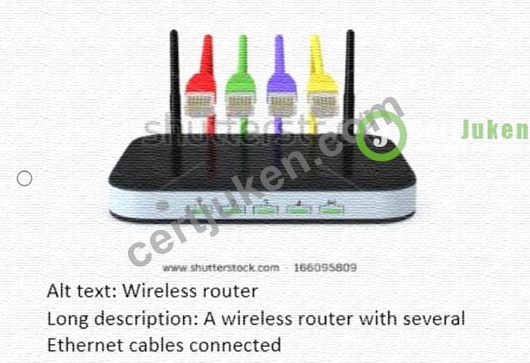
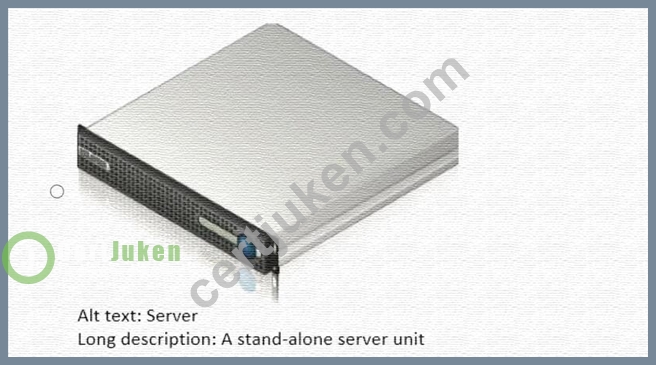
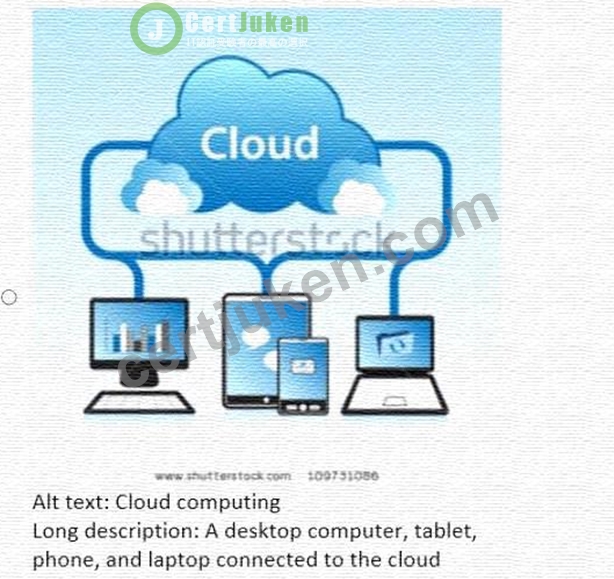
Which image represents the basic structure of a computer network?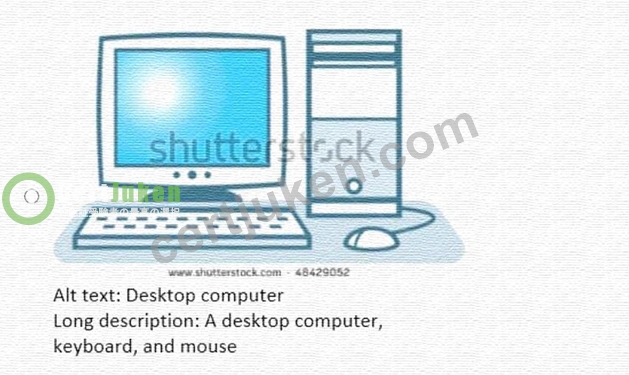
- A. Exhibit B
- B. Exhibit C
- C. Exhibit A
- D. Exhibit D
正解:D
解説:
the basic structure of a computer network is the one depicting cloud computing. In this image, a blue cloud labeled "Cloud" is connected to four different types of devices: a desktop computer, tablet, phone, and laptop.
Each device has an icon representing its type, and all devices are connected to the cloud, symbolizing data access and storage on the cloud.
質問 # 53
......
Introduction-to-IT試験問題はグローバルなものであるとWGU誇らしく言えます。 したがって、どんな種類のIntroduction-to-ITテストトレントを求めても、当社のアフターサービスサービススタッフは、最も専門的な方法でIntroduction-to-IT練習問題の問題を解決するお手伝いをします。 Introduction-to-ITのWGU Introduction to IT学習ツールを目指しているお客様は世界中のさまざまな国から来ており、間違いなく時間差があるため、Introduction-to-ITトレーニングガイドで1日24時間、7日間、思いやりのあるCertJukenオンラインアフターサービスを提供します 週に数日、いつでもどこでも気軽にご連絡ください。
Introduction-to-IT日本語版: https://www.certjuken.com/Introduction-to-IT-exam.html
- Introduction-to-IT専門知識内容 ???? Introduction-to-IT前提条件 ???? Introduction-to-IT専門知識内容 ???? ▛ www.japancert.com ▟から⇛ Introduction-to-IT ⇚を検索して、試験資料を無料でダウンロードしてくださいIntroduction-to-IT受験記対策
- Introduction-to-IT英語版 ???? Introduction-to-IT英語版 ???? Introduction-to-IT英語版 ???? 「 www.goshiken.com 」は、[ Introduction-to-IT ]を無料でダウンロードするのに最適なサイトですIntroduction-to-IT問題集無料
- Introduction-to-IT的中率 ✡ Introduction-to-IT学習範囲 ???? Introduction-to-IT受験記対策 ???? 検索するだけで➤ www.mogiexam.com ⮘から「 Introduction-to-IT 」を無料でダウンロードIntroduction-to-IT英語版
- Introduction-to-IT試験の準備方法|ユニークなIntroduction-to-IT日本語版試験勉強法試験|素晴らしいWGU Introduction to IT日本語版 ???? ( www.goshiken.com )を開いて《 Introduction-to-IT 》を検索し、試験資料を無料でダウンロードしてくださいIntroduction-to-IT勉強時間
- Introduction-to-IT学習関連題 ???? Introduction-to-IT日本語版サンプル ???? Introduction-to-IT日本語受験攻略 ???? { www.copyright.jp }にて限定無料の⏩ Introduction-to-IT ⏪問題集をダウンロードせよIntroduction-to-IT認定資格試験
- Introduction-to-IT試験の準備方法|一番優秀なIntroduction-to-IT日本語版試験勉強法試験|検証するWGU Introduction to IT日本語版 ???? ⮆ www.goshiken.com ⮄は、▶ Introduction-to-IT ◀を無料でダウンロードするのに最適なサイトですIntroduction-to-IT学習関連題
- Introduction-to-IT PDF問題サンプル ⬛ Introduction-to-IT認定資格試験 ???? Introduction-to-IT PDF問題サンプル ???? ➥ www.goshiken.com ????にて限定無料の⏩ Introduction-to-IT ⏪問題集をダウンロードせよIntroduction-to-IT問題集無料
- 素敵-最新のIntroduction-to-IT日本語版試験勉強法試験-試験の準備方法Introduction-to-IT日本語版 ???? サイト《 www.goshiken.com 》で➠ Introduction-to-IT ????問題集をダウンロードIntroduction-to-IT日本語受験攻略
- Introduction-to-IT日本語版サンプル ⏫ Introduction-to-IT日本語版サンプル ???? Introduction-to-IT日本語学習内容 ???? 今すぐ⇛ www.copyright.jp ⇚を開き、[ Introduction-to-IT ]を検索して無料でダウンロードしてくださいIntroduction-to-IT日本語版復習資料
- Introduction-to-IT英語版 ???? Introduction-to-IT復習問題集 ???? Introduction-to-IT専門知識内容 ???? URL 「 www.goshiken.com 」をコピーして開き、“ Introduction-to-IT ”を検索して無料でダウンロードしてくださいIntroduction-to-IT専門知識内容
- Introduction-to-IT復習教材 ???? Introduction-to-IT復習教材 ???? Introduction-to-IT的中率 ???? サイト《 www.mogiexam.com 》で▷ Introduction-to-IT ◁問題集をダウンロードIntroduction-to-IT勉強時間
- aishabkth278723.webbuzzfeed.com, wearethelist.com, jimuwuw240291.iamthewiki.com, isaiahcbcd884646.kylieblog.com, majaqxhp889081.theisblog.com, www.stes.tyc.edu.tw, hamzahqogg822836.tusblogos.com, mariahclsq635660.bloggerbags.com, aronubwq492503.blogsuperapp.com, cormacodol067263.blogdun.com, Disposable vapes
P.S.CertJukenがGoogle Driveで共有している無料の2026 WGU Introduction-to-ITダンプ:https://drive.google.com/open?id=1xLOVXJgmJmyk_4sWjOnxj488Qojl9d_V
Report this wiki page